

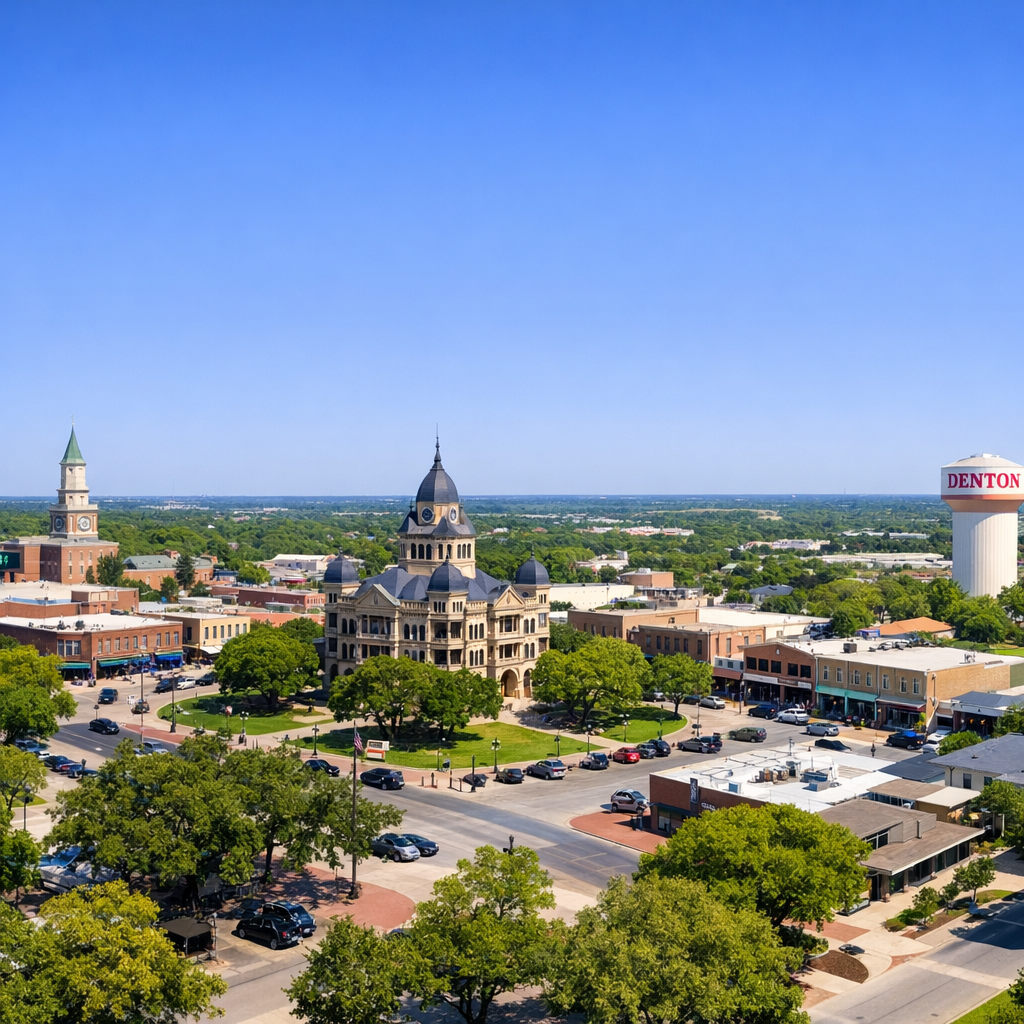
Denton, Texas, experiences a humid subtropical climate, characterized by hot, humid summers and mild to cool winters. Understanding these patterns can help residents better prepare for seasonal changes and participate in local environmental initiatives.
Seasonal Weather Patterns
Summer: From early June to mid-September, Denton faces its hottest months, with average high temperatures peaking around 95°F (35°C) in July. The combination of heat and humidity can make outdoor activities challenging during this period.
Winter: The cool season spans from late November to late February, with average daily high temperatures below 63°F (17°C). January is typically the coldest month, with average lows around 33°F (1°C).
Precipitation: Denton receives an average annual rainfall of approximately 39 inches (991 mm), with May often being the wettest month. Snowfall is rare but can occur in the winter months.
Environmental Initiatives
The City of Denton is committed to environmental stewardship. In 2022, the city adopted a Science-based Target to reach net-zero carbon emissions by 2050 through the creation of a Climate Action Plan. This plan includes strategies to reduce greenhouse gas emissions and increase community resilience. Residents can participate in various programs aimed at improving regional air quality and reducing emissions from motor vehicles and gas-powered lawn equipment. Additionally, the city offers incentives to help offset the cost of new purchases that contribute to energy efficiency.
Understanding Denton’s climate and participating in local environmental initiatives can help residents adapt to seasonal changes and contribute to the city’s sustainability goals.